Brotato
 GFA METERSTRONG
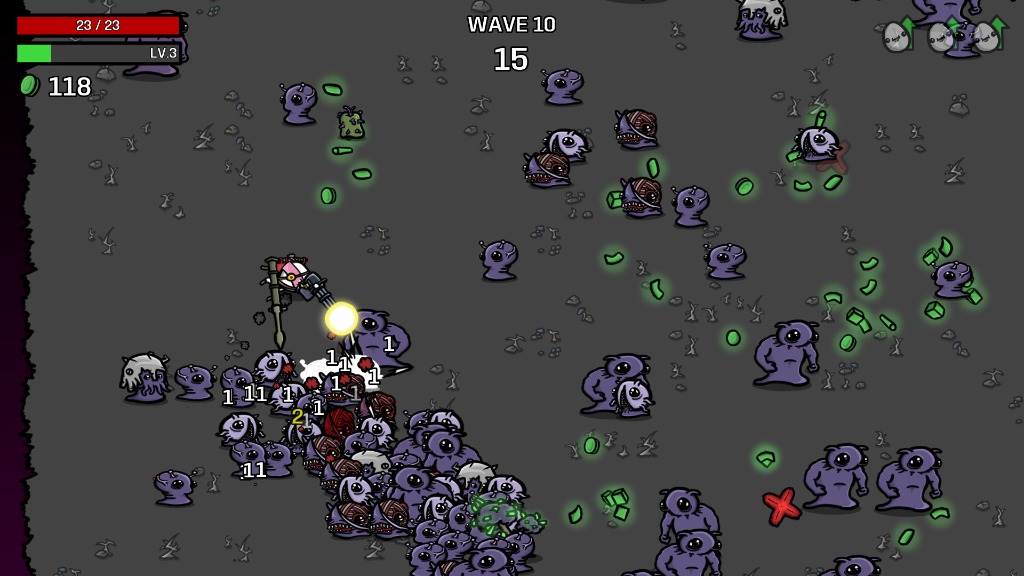
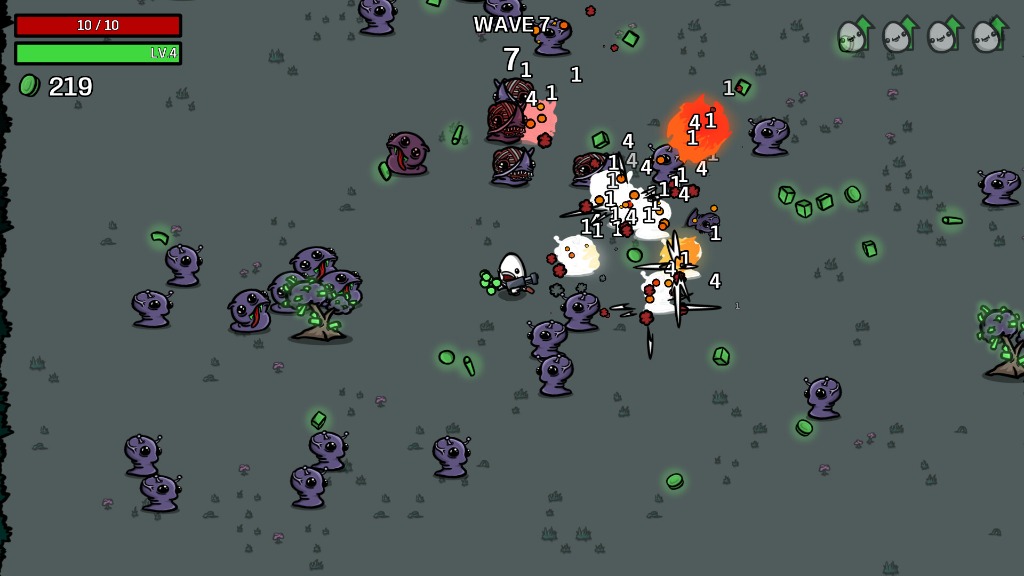
The smartest design choice is how the game handles shooting: weapons auto-fire by default, but you can switch to manual aiming if you want more control. That means Brotato works for both “I want to pilot the build” players and “I want to pilot the crosshair” players, without forcing either style. Between waves, you spend the materials you collected to buy gear and stat boosts in a shop—so every run becomes a miniature buildcraft puzzle: do you stack damage, chase survivability, or gamble on a weird synergy that could either pop off or get you mashed into fries?
Variety is the long-term engine. The game promises dozens of characters with different traits (the kind that change what stats you care about) and hundreds of items and weapons, ranging from serious firepower to “sticks and stones, but make it lethal.” Runs also stay snappy—Steam explicitly calls out “fast runs (under 30 minutes)”—which is why it's so easy to keep restarting.
It's also surprisingly social for a game that's happy as a solo addiction: it supports local co-op for up to 4 players, and the Steam feature list includes Remote Play Together and Steam Workshop, which is basically an invitation to let the community add more chaos to your chaos. There's even a DLC pack listed (Abyssal Terrors), so if you do fall into the potato hole, there's extra content waiting at the bottom.
The result is a game that feels “simple” only until you realize how many meaningful decisions it squeezes into a tiny runtime. And judging by its Overwhelmingly Positive user reception on Steam, you won't be the only one accidentally losing track of time.
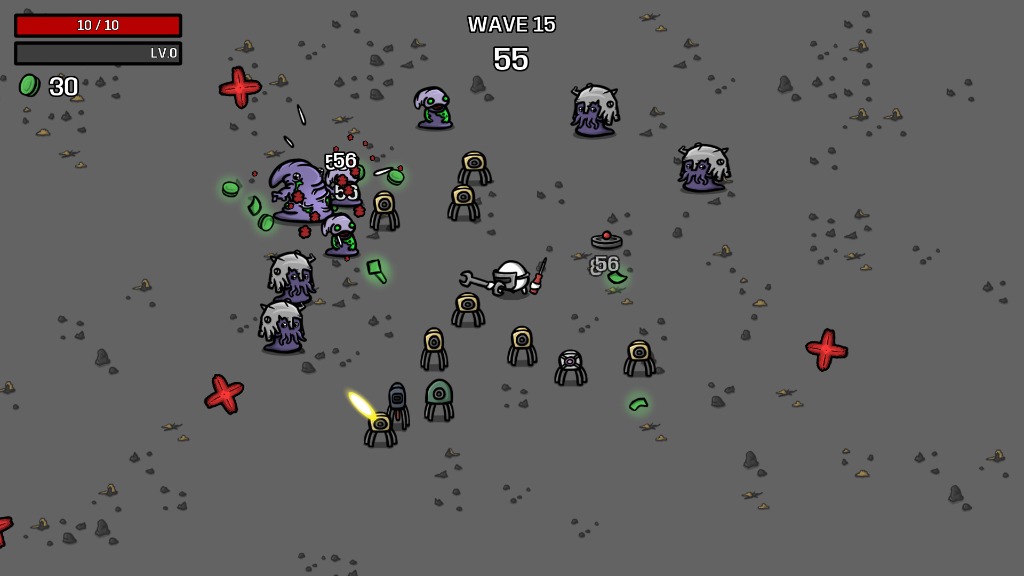
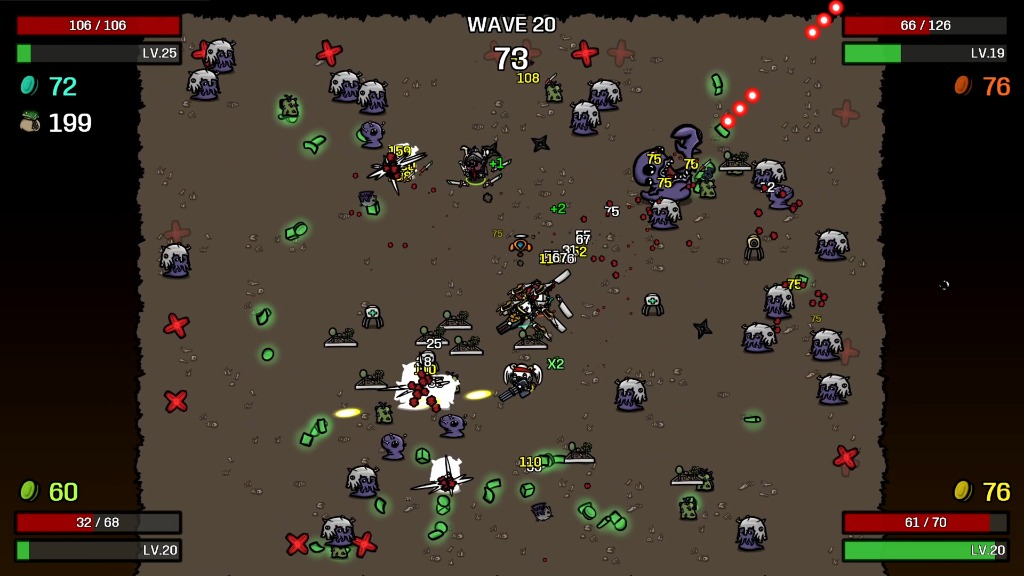
Screenshots