Rice Bowl Restaurant
 GFA METERGOOD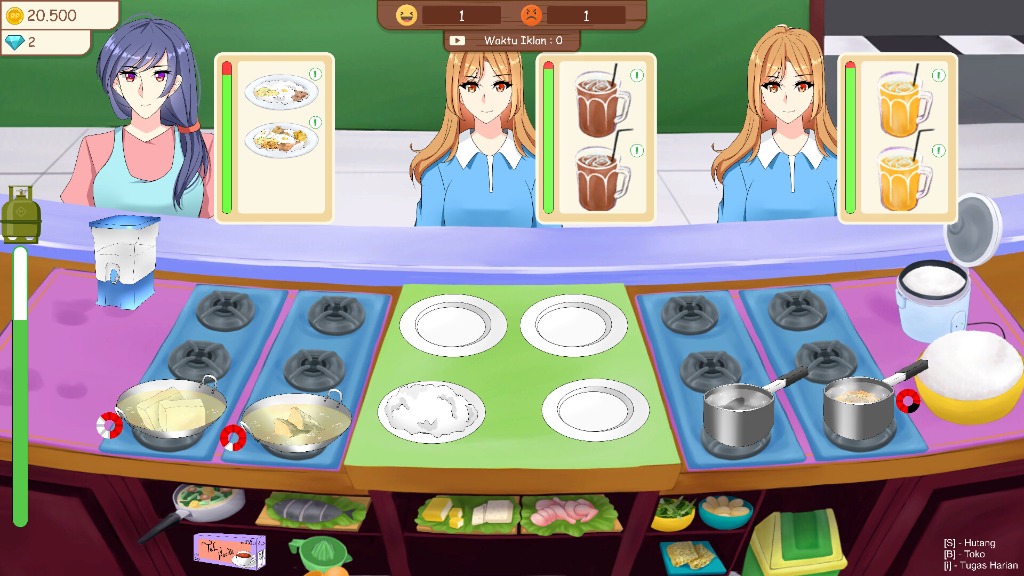
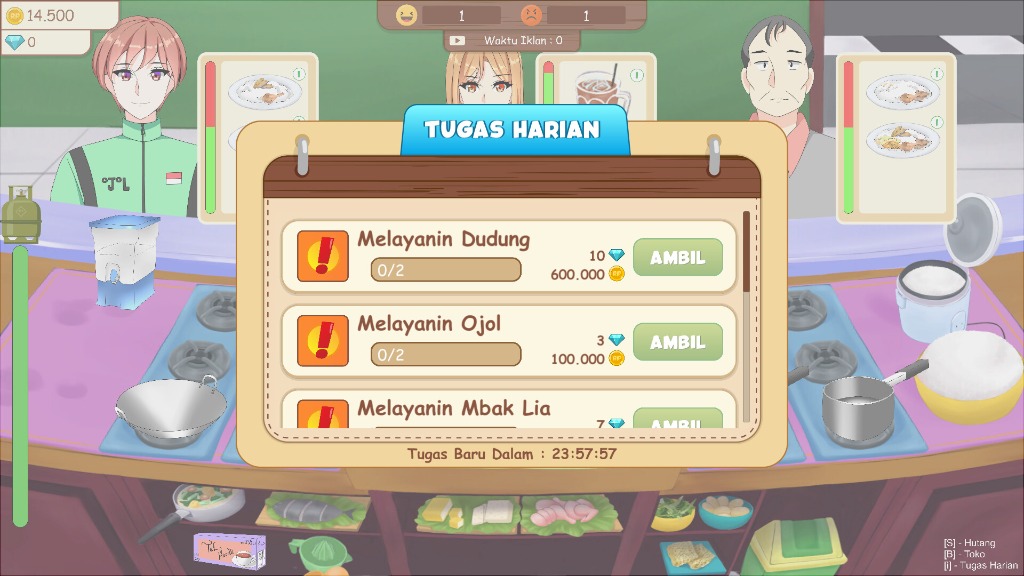
Progression is where it stays comfortably “upper average.” There's a constant drip of upgrades to make the stall faster and more efficient, plus advertising to increase customer traffic—so the game reliably gives you something to chase. It also layers in daily missions, which are good for structure (especially if you like being nudged toward goals rather than setting your own). The “pay debts and unlock stories” element adds a light narrative wrapper—more motivation than plot-heavy drama—but it does help the grind feel a bit more purposeful.
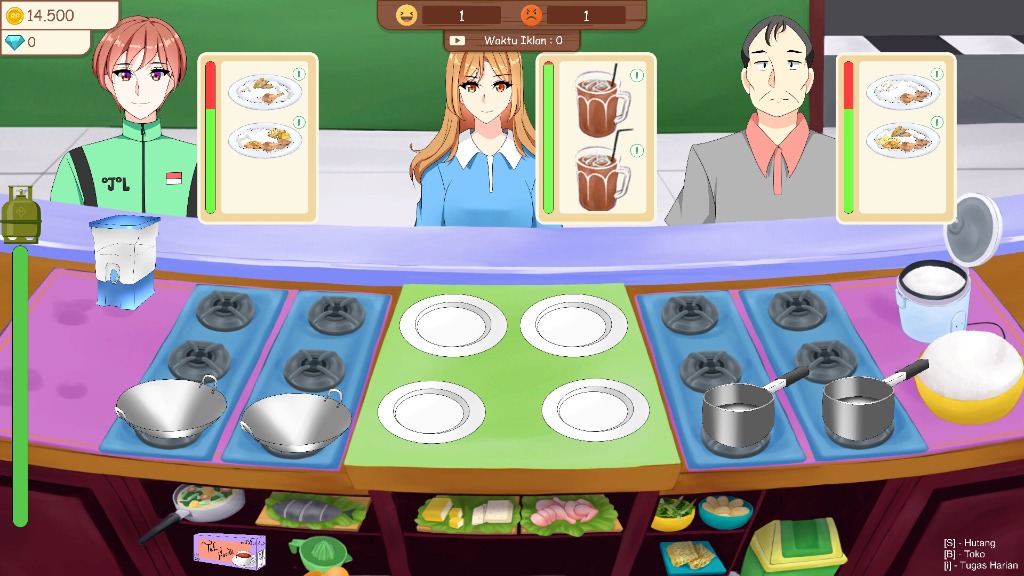
That said, the game also shows its “mobile DNA” in places. Systems like daily prize collection and a lucky spin are classic engagement mechanics: they can be fun little bonuses, but they don't add much strategic depth, and they make the overall structure feel more like “checklist progression” than a sandbox where you're making meaningful management decisions. If you're expecting deep staff scheduling, supply chains, menu engineering, or a big restaurant expansion arc, this isn't that. It's mostly a polished rinse-and-repeat loop with small variations in customers and pacing.
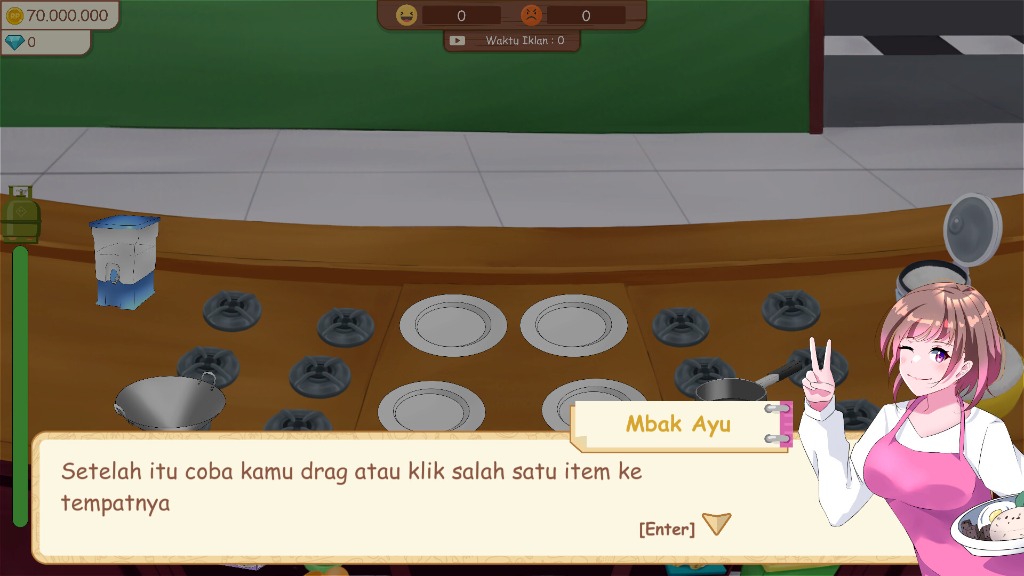
Presentation is serviceable. It does the job of keeping information readable during busy moments, but it's not a “wow, I love being here” visual showcase. On the plus side, it's accessible: the game supports a lot of interface/subtitle languages (including Indonesian and Dutch), which is a nice touch for such a niche theme. It's also lightweight on PC specs, which fits the casual pick-up-and-play nature.
One more practical note: there's a demo on Steam, and in a game this loop-driven, that's honestly perfect—if the rhythm grabs you in the demo, you'll probably enjoy the full thing; if it doesn't, the later hours won't suddenly transform it.

Screenshots