RimWorld
 GFA METERGREAT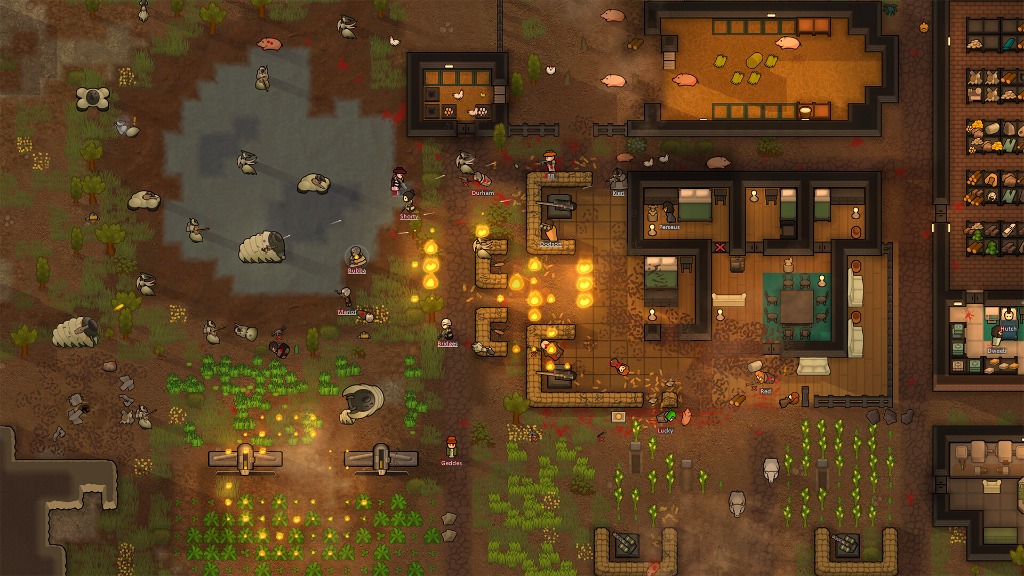
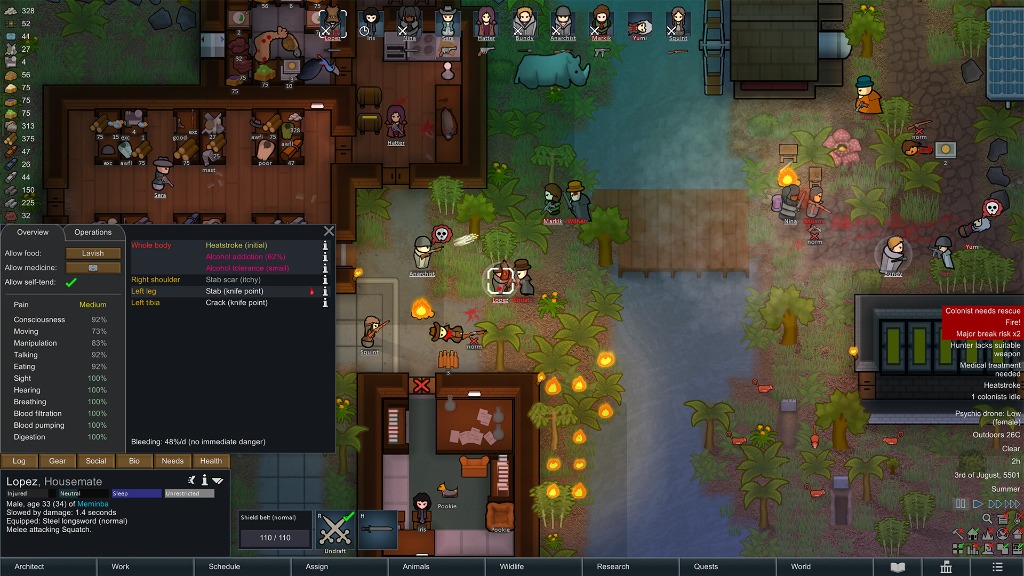
The fun comes from how many systems are constantly in motion. Needs, wounds, illnesses, addictions, weather, biomes, trade, diplomacy—RimWorld simulates an absurd amount of “real life, but worse.” You'll be managing medical emergencies, patching up missing limbs with prosthetics or bionics, taming animals, and occasionally wondering whether you've become the kind of person who can calmly evaluate the pros and cons of organ replacement “harvested from others.” (The game is very good at making you say “I'm doing this for the colony,” and then making you stare into the mirror afterward.)
And yes—disasters strike when you're unprepared, because RimWorld is a specialist in finding the single weakest link in your “perfect” plan. A fire starts during a heatwave. Your best doctor gets the flu. The raiders arrive exactly when half the colony is asleep and the other half is having a mental break because they ate without a table. RimWorld explicitly frames these events as the AI storyteller “controlling the random events” that get thrown at you, and it's why every colony—no matter how optimized—eventually becomes an exciting mess. That suffering is the secret sauce: it's not just challenge, it's plot. You don't remember your tidy storage room; you remember the night your freezer failed and your entire food supply tried to become biology.
Then there are the DLCs, which don't just add content—they add new ways for your colony to spiral into memorable nonsense:
Royalty brings an Empire, titles, and psychic powers—so you can roleplay a refined noble court right up until a manhunter pack teaches everyone humility.
Ideology lets you define belief systems, meaning your colony can become charitable ranchers, transhumanists, or “piratical nudist cannibals,” and the game will treat that as a totally normal workplace culture.
Biotech adds children, genetics, and mechanoids—so you can raise a family and pilot robots and accidentally create a gene-engineered nightmare that only wants to kill.
Anomaly pivots into full horror: cult threats, undead vibes, invisible hunters, and “sanity-shredding perils”—it's RimWorld making eye contact and saying, “You wanted darker? Say less.”
Odyssey expands the fantasy of “not stuck in one place” into a bigger travel/exploration direction—build your own ship, roam across biomes, and even scavenge ancient tech in space locations like asteroids and stations.
And finally: mods. RimWorld has Steam Workshop support and the base game explicitly invites you to explore “hundreds of wild and interesting mods.” This is where the game becomes a multiverse. Some mods are pure joy—quality-of-life improvements, expanded building options, new factions, new storytelling tools. Others go very dark (yes, including torture-themed mods), because the community ranges from “please let my pawns carry more items” to “what if ethics were optional DLC.” The beauty is choice: you can tailor RimWorld into cozy survival, hardcore realism, slapstick chaos, or grim sci-fi horror… and the storyteller will still find a way to surprise you.
RimWorld isn't about “winning.” It's about building something you're proud of, watching it catch fire in a totally preventable way, and immediately starting a new run because now you have a better plan. (You don't. But it's adorable that you think you do.)
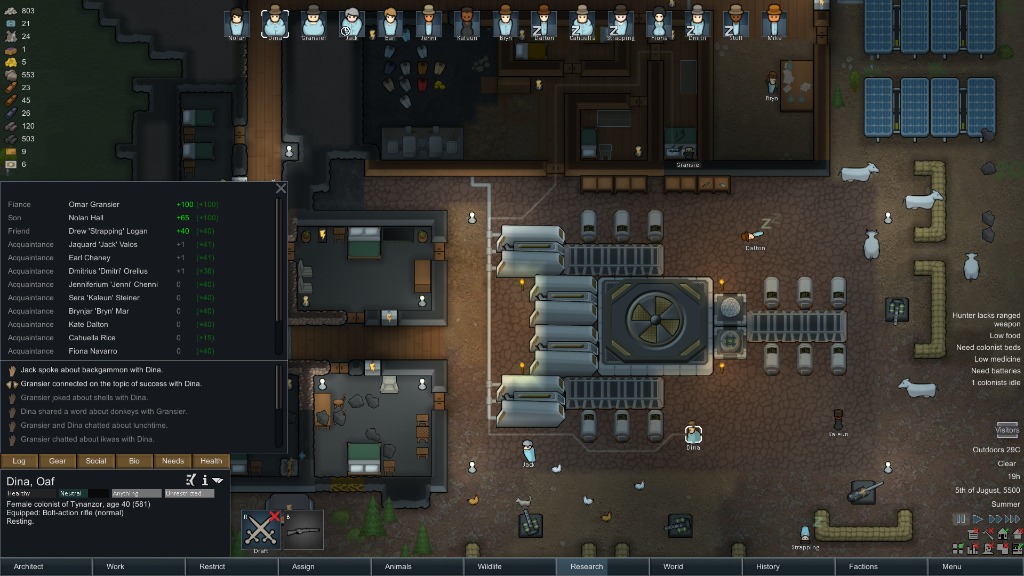
Screenshots